
Ingredients
For the Sarson ka saag
For the Makki di roti
Method
Saag preparation
- 1
Wash the mustard greens, spinach, and bathua thoroughly in plenty of water. Shake dry and chop the leaves; discard only the toughest sarson stems.
- 2
In a pressure cooker or heavy pot, add the chopped greens, half the garlic, ginger, green chillies, and salt. Pour in about 1 cup water, stir, and cook: 10 minutes under pressure on medium heat, or simmer covered until the greens are very soft.
10 minTip: If simmering without pressure, keep the heat low and check the water so it doesn’t dry out.
- 3
Let the pressure drop naturally. Open and mash the greens coarsely with a mathani or give a few short pulses in a blender. Keep the texture rustic, not a smooth puree.
5 min - 4
Return the pot to low heat. Sprinkle in maize flour while whisking so it doesn’t lump. Cook 10 to 15 minutes, stirring often, until the saag thickens and loses the raw flour smell.
15 min - 5
For tadka, heat ghee in a kadhai on medium. Add asafoetida, then onion, and bhuno till golden. Add the remaining minced garlic and cook till fragrant and lightly browned. Stir in red chilli powder and immediately pour this over the simmering saag.
6 minTip: Adding chilli powder just before pouring prevents it from burning.
- 6
Stir the tadka into the saag and simmer 5 minutes on low. Switch off, rest 10 minutes, then top with a spoon of white butter before serving.
15 minTip: Resting lets the mustard’s sharpness mellow and the flavors come together.
Pro tips: Mash the saag coarsely with a mathani: A coarse mash keeps the greens fibrous and rustic, the way it’s meant to be, not a baby-smooth puree. · Let the saag rest before serving: A 10-minute rest off the heat lets mustard and ginger settle and meld, giving a rounder flavor.
Makki di roti preparation
- 7
In a bowl, mix maize flour, whole wheat flour (if using), salt, and carom seeds. Bring water to a rolling boil separately.
- 8
Pour in boiling water a little at a time, stirring with a spoon till the mixture turns sandy and moist. Cover and rest 10 minutes so it cools slightly and hydrates.
10 minTip: Boiling water gelatinizes the maize flour, making the dough pliable.
- 9
Knead with wet hands for 5 to 8 minutes until smooth and supple. If it cracks, wet your hands again and continue kneading.
8 min - 10
Divide into golf-ball portions. Roll each between two sheets of parchment, or pat with wet fingers, to a 12 to 14 cm round with even edges.
Tip: Parchment prevents sticking and tearing.
- 11
Heat a tawa on medium-high. Lay a roti on it; cook till brown spots appear, then flip. Brush ghee and cook the second side till cooked through and lightly crisp. Repeat and keep rotis wrapped in a clean cloth.
Tip: If edges look dry, dab a few drops of water on the uncooked side before flipping.
Pro tips: Use boiling water for the roti dough: Boiling water gelatinizes the maize flour, making the gluten-free dough far more pliable and easier to roll without cracking. · Roll rotis between parchment: Parchment stops the delicate dough from sticking to the belan or counter, helping you get neat rounds. · Add a little whole wheat only if needed: A small amount of whole wheat flour helps bind makki ka atta and reduces cracks during shaping.
Serving and storage
How to serve
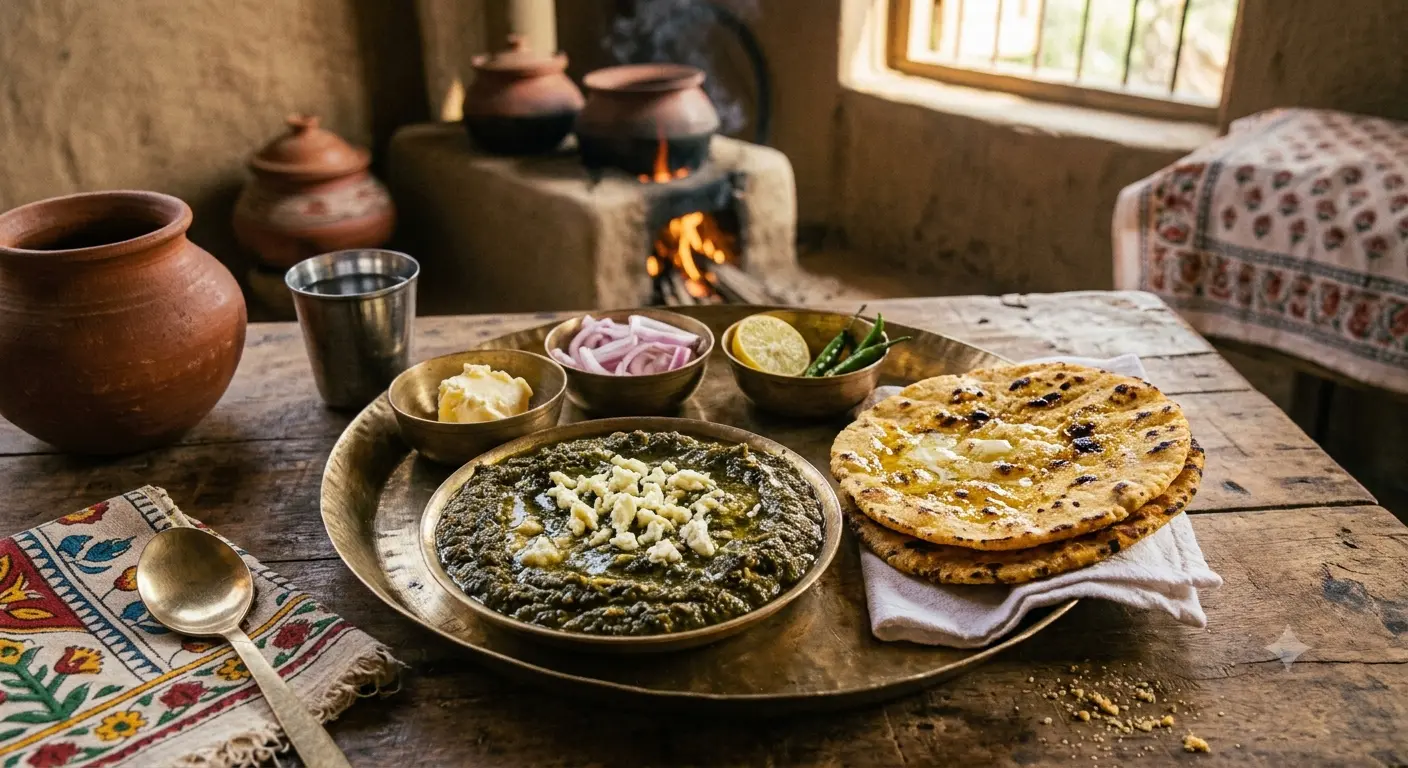
Serve the saag hot with a dollop of white butter, alongside makki di rotis. Add raw onion on the side and a small piece of jaggery to balance the greens.
Storage and reheating
Cool the saag and refrigerate in an airtight container; reheat gently on low with a splash of water. Rotis are best fresh; reheat on a hot tawa with a touch of ghee. The roti dough can be kept covered and warm for an hour if you’re cooking in batches.
Frequently asked questions
Can I make sarson ka saag without bathua?
Yes. Just increase the spinach to replace bathua. You’ll still get a good balance with mustard.
Why add maize flour to the saag?
It lightly thickens the greens and helps them hold together without turning pasty. Cook it out till the raw smell goes.
How can I stop makki di roti from cracking?
Use boiling water to hydrate, knead well, and roll between parchment. If needed, add a little whole wheat flour for binding.
Can I slow-cook the saag instead of pressure cooking?
Yes. Simmer in a covered pot on low heat till the greens are very tender, stirring and adding water as needed.
My saag became too smooth—what now?
Stir in a bit more maize flour and simmer briefly, then mash lightly with a mathani to bring back some texture.
Can I make the roti dough ahead?
You can hold it covered for a short while. Keep it warm and shape-cook close to serving for the best texture.