Ingredients
For the Sabudana khichdi
Method
Sabudana khichdi
- 1
Rinse sabudana under running water 3 to 4 times, rubbing gently until the water runs clear and the surface starch is gone.
3 minTip: Clear rinse water is key to non-sticky khichdi.
- 2
Soak with just enough water to cover the pearls by a few millimetres for 4 to 6 hours or overnight. They’re ready when a pearl squishes easily without a hard core.
Tip: Too much water makes them gummy; keep it just to cover.
- 3
Drain completely in a colander and let sit a few minutes so excess moisture drips off.
5 min - 4
Dry-roast peanuts on medium heat until golden and nutty, 5 to 7 minutes. Cool, peel by rubbing, and crush coarsely in a mortar or pulse in a jar.
7 min - 5
In a bowl, toss drained sabudana with crushed peanuts, sugar, and sendha namak until each pearl is lightly coated.
1 minTip: The peanut powder soaks up moisture and keeps the grains separate.
- 6
Heat ghee in a heavy kadhai on medium. Add cumin seeds and let them crackle.
1 min
Pro tips: Coat pearls before cooking: Tossing drained sabudana with crushed peanuts, salt, and sugar absorbs surface moisture so the grains stay separate and non-sticky. · Light oiling helps: A quick toss of the soaked, drained pearls with a little oil creates a thin fat layer that further prevents clumping in the pan.
Sabudana khichdi (continued)
- 7
Add curry leaves, green chillies, and ginger. Saute until aromatic, about 30 seconds.
1 minTip: Skip curry leaves and ginger if you keep a stricter fast.
- 8
Add boiled potato cubes and saute 1 to 2 minutes until their edges turn lightly golden.
2 min - 9
Lower the heat to low. Tip in the sabudana-peanut mixture and fold gently to combine.
1 minTip: Keep the heat low; high heat makes pearls clump.
- 10
Cook 3 to 5 minutes, stirring every 30 seconds, just until most pearls turn translucent and glossy.
5 minTip: If the pearls feel dry or tight, sprinkle 1 to 2 tsp water and cover for 1 minute to steam.
- 11
Switch off the heat. Add lemon juice and coriander leaves, and toss gently.
1 min - 12
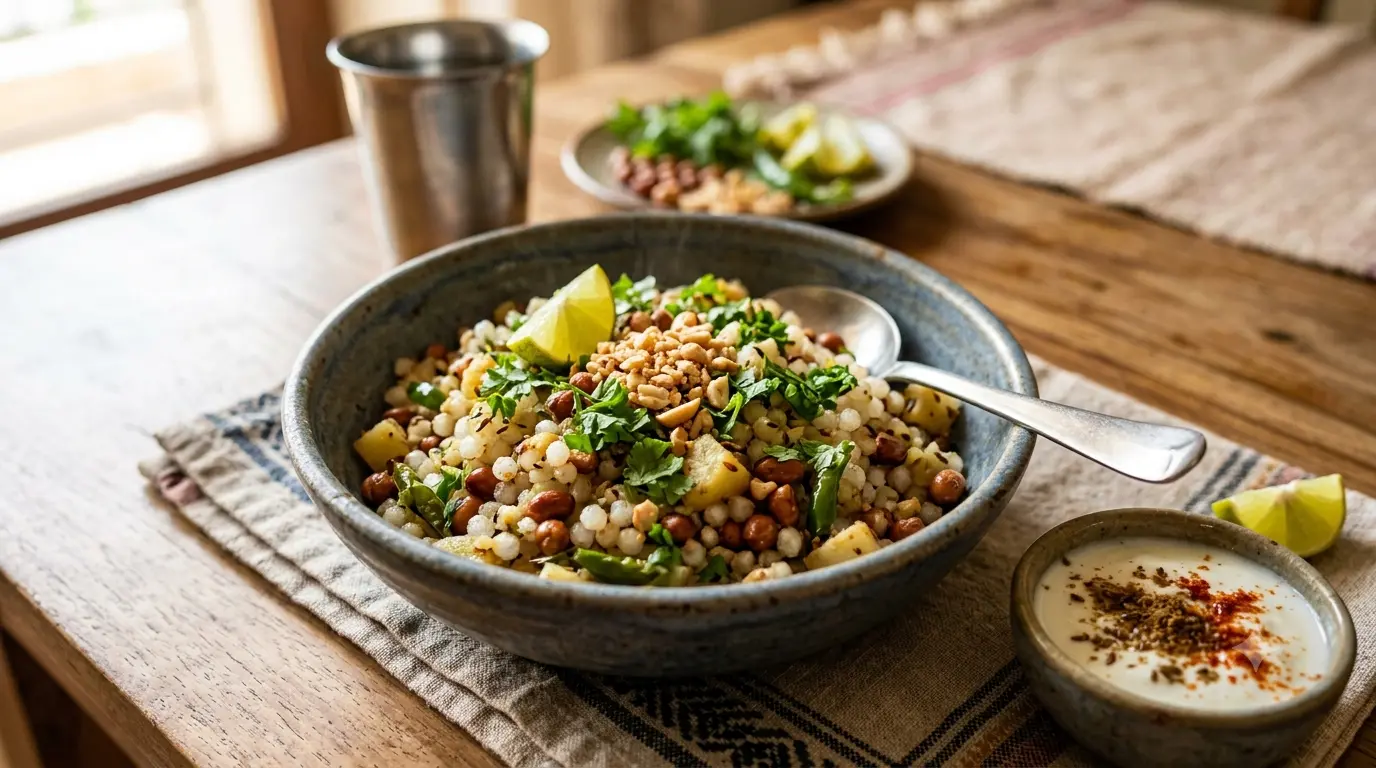
Garnish with fresh coconut and a little extra coriander if you like. Serve hot.
Tip: Tastes great with a side of sweetened curd or adrak chai.
Pro tips: Steam to finish, not to mash: If the pearls resist turning translucent, a tiny splash of water and a covered minute of steam softens them without making them mushy. · Add crunch at the end: Fry whole peanuts and even the potato separately until crisp, then fold them in at the end for a nice contrast to the soft sabudana.
Watch it made
Serving and storage
How to serve
Serve hot with sweetened curd (a pinch of sugar and a spoon of peanut powder), satvik coconut chutney, or a cup of ginger tea. A wedge of lemon on the side is handy.
Storage and reheating
Best fresh, but keeps 1 day in an airtight box in the fridge. For make-ahead, soak sabudana the day before, roast-crush peanuts, and boil potatoes. Reheat on low in a covered pan, sprinkling 1 to 2 tsp water or a little ghee until the pearls turn glossy again.
Frequently asked questions
How do I keep sabudana khichdi from turning sticky?
Rinse until water runs clear, soak with just enough water to cover, drain well, and pre-mix with crushed peanuts, salt, and sugar. Cook on low only until translucent.
How long should I soak sabudana?
Soak 4 to 6 hours with water just covering the pearls. If your pearls are very dry, leave them overnight. They should mash easily without a hard centre.
Can I make it without potatoes?
Yes. Skip the potato and proceed; the texture will be lighter. You can increase peanuts slightly for more body.
Is ginger and curry leaves allowed for fasting?
Fasting rules vary by home. Many include them, others skip. If you keep a stricter fast, omit both and keep the rest the same.
Can I use regular salt instead of sendha namak?
For everyday cooking, regular salt is fine. For vrat or upvas, use sendha namak.
What if my sabudana is still hard while cooking?
Sprinkle 1 to 2 teaspoons of water, cover for a minute on low heat to steam, and check again. Don’t overcook or stir aggressively.