Ingredients
For the Kuttu ki poori
Method
Kuttu ki poori preparation
- 1
In a wide bowl, combine kuttu atta with sendha namak, black pepper (if using), cumin (seeds or powder), and chopped coriander. Mix well so the seasoning is even.
2 minTip: Sift the atta first so it hydrates evenly.
- 2
Add the finely grated boiled potato. Rub it into the flour with your fingertips until it looks evenly moist and crumbly, like coarse breadcrumbs.
2 minTip: Grating prevents tiny lumps that stop pooris from puffing.
- 3
Bring the mixture together into a dough, adding warm water a spoon at a time only if it feels too dry. Knead until smooth, stiff, and non-sticky.
3 minTip: A slightly stiff dough puffs better and drinks less oil.
- 4
Cover and rest the dough for 5 to 10 minutes so the flour relaxes and the moisture evens out.
10 minTip: Do not over-rest; gluten-free dough can loosen if left too long.
- 5
Grease your palms with a few drops of oil, knead the dough once, and divide into equal medium balls.
3 minTip: Keep the remaining dough covered with a plate or cloth.
- 6
Grease the rolling surface and pin lightly. Roll each ball into a slightly thick disc, about 3 to 4 inches across. If it sticks or tears, roll between two greased plastic sheets.
5 minTip: Do not roll too thin; thicker pooris puff and won’t crack.
Pro tips: Use arbi instead of potato: Boiled taro root binds kuttu beautifully and the pooris absorb a little less oil than with potato. · Roll between greased plastic sheets: This supports the delicate gluten-free dough so it doesn’t stick or tear, and it’s easy to lift into hot oil. · Grate the potato, don’t mash: Fine shreds disappear into the dough and avoid tiny lumps that block steam and stop the poori from puffing.
Kuttu ki poori preparation (continued)
- 7
Heat oil in a deep kadhai on medium-high. Test with a tiny dough bit; it should rise to the top at once and sizzle without smoking.
5 minTip: Too hot burns, too cool makes oily pooris.
- 8
Slide in one poori carefully. After it floats, gently press and rotate the edges with a slotted spoon to help it balloon.
1 minTip: The surface will swell and change from dull to slightly glossy when ready to flip.
- 9
Flip and fry the second side until evenly golden and crisp.
1 minTip: Each poori usually takes under 1.5 minutes total.
- 10
Lift out, drain on paper, and repeat with the rest. Keep the oil at steady medium-high heat, adjusting the flame as needed.
1 minTip: If pooris stop puffing, the oil is cooling down.
Pro tips: Serve with cooling curd: Buckwheat is considered ‘hot’ in Ayurvedic tradition; yogurt dishes balance it and feel gentler in warm weather.
Serving and storage
How to serve
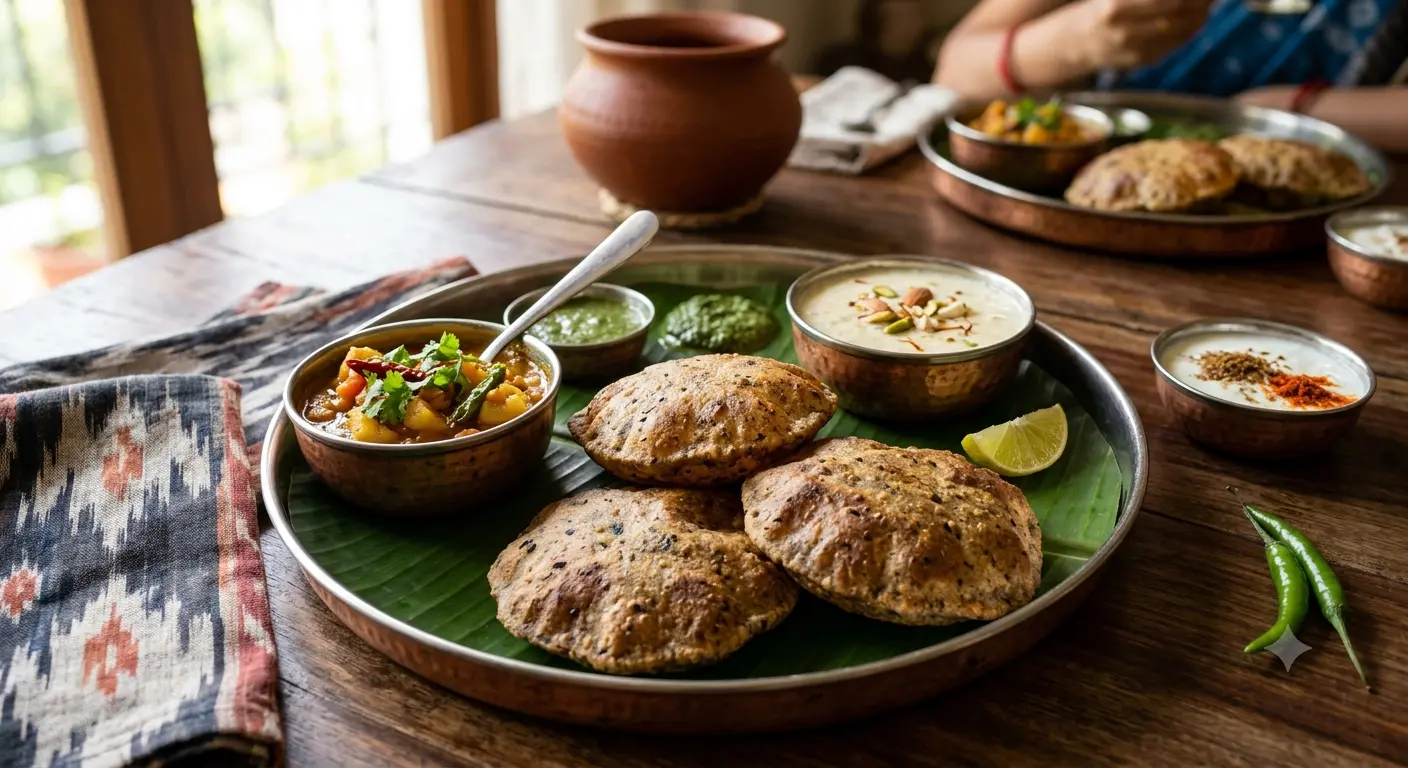
Serve the pooris hot with aloo ki sabzi, kaddu ki sabzi, or dahi wali arbi. Add a simple boondi or cucumber raita to cool things down. Sprinkle a pinch of sendha namak on top just before eating if you like.
Storage and reheating
Best eaten fresh. Keep fried pooris for up to 8 hours at room temperature in a covered container, or 1 day in the fridge in an airtight box. Reheat on a hot tawa for 30 to 45 seconds per side or in an air-fryer at 160°C for 2 to 3 minutes. Boil and grate potatoes a day ahead and chill; mix the dough just before frying.
Frequently asked questions
How do I make kuttu poori without potato?
Scald the flour with boiling water: pour a little at a time, stir with a spoon to a shaggy mass, then knead when warm. Or use boiled arbi (taro) as the binder.
My kuttu pooris aren’t puffing. What went wrong?
Check for potato lumps, dough that’s too soft, discs rolled too thin, or oil that isn’t hot enough. A test crumb should rise immediately before you start frying.
Is kuttu poori allowed in Navratri fast?
Yes. Buckwheat (kuttu) and sendha namak are commonly used for vrat, while wheat flour and regular table salt are avoided.
Can I use regular salt instead of sendha namak?
For fasting, use sendha namak. If you’re not fasting, regular salt works, but the flavor is slightly different.
Can I make the dough ahead?
Rest it only 5 to 10 minutes. Longer rests can loosen gluten-free dough. Instead, keep portioned dough balls covered and roll just before frying.