Ingredients
For the Rajgira Paratha
Method
Rajgira Paratha preparation
- 1
Boil the potatoes in enough water to cover until completely tender and a knife slides in easily.
15 minTip: Smaller chunks cook faster and mash smoother.
- 2
Drain, peel and mash or grate the potatoes while still warm until no lumps remain.
5 minTip: Warm potatoes bind the flour better.
- 3
In a mixing bowl, add amaranth flour, the warm mashed potatoes, green chillies, coriander, roasted cumin powder, ginger and sendha namak.
- 4
Mix by hand to bring it together. If it feels dry or crumbly, add warm water a teaspoon at a time and form a semi-stiff, smooth dough. Do not over-knead.
3 minTip: Too much water will make it sticky; go slow.
- 5
Cover the dough with a damp cloth and rest for 5 to 10 minutes.
5 minTip: Don’t rest longer; potatoes release moisture and the dough turns sticky.
- 6
Divide into 5 equal balls. Lightly grease your palms so the dough doesn’t cling.
2 min
Pro tips: Mash potatoes while warm: Warm potatoes mash without lumps and their starch helps bind the amaranth flour, giving softer parathas. · Roasted peanut crunch: Mix a spoonful of coarsely crushed roasted peanuts into the dough for a nutty flavour and light crunch against the soft flatbread.
Rajgira Paratha preparation (continued)
- 7
For easy rolling, place a dough ball between two small sheets of parchment or greased plastic and roll gently to a medium thickness, about 5 to 6 inches. Or grease the board and pin, or very lightly dust with rajgira flour.
3 minTip: Lift the top sheet first, then flip onto your palm to transfer without tearing.
- 8
Heat a tawa on medium. Place the rolled paratha on the hot tawa.
1 minTip: The tawa is ready when a drop of water sizzles off quickly.
- 9
Cook the first side until the surface looks slightly translucent with light spots, then flip.
2 min - 10
Brush ghee around the edges and a few drops on top. Press gently with a spatula and cook until golden-brown spots appear on both sides. Repeat with remaining dough.
3 minTip: Keep heat medium so it cooks through without drying out.
Pro tips: Roll between parchment or plastic: Rajgira dough tears easily because there’s no gluten. Rolling between sheets lets you lift and transfer the paratha cleanly to the tawa. · Grease the rolling surface: A thin film of ghee or oil on the board and pin prevents sticking without adding dry flour that can make parathas crack or turn dusty.
Serving and storage
How to serve
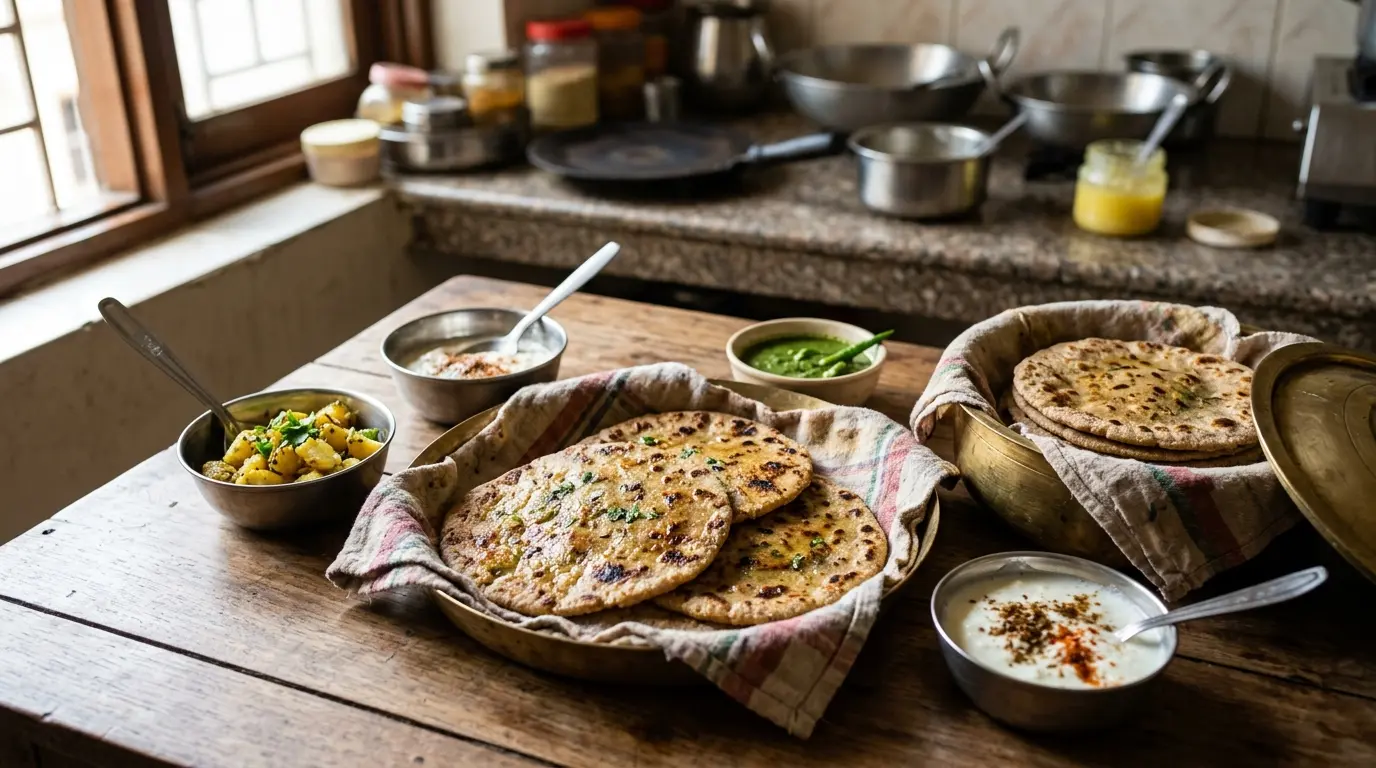
Serve hot with dahi, a phalahari green chutney, jeera aloo or vrat ki kadhi. If keeping for a bit, stack in a cloth-lined casserole to stay soft.
Storage and reheating
Best eaten hot. Cooked parathas keep 1 day in the fridge in an airtight box; reheat on a warm tawa with a few drops of ghee. Dough doesn’t store well as it weeps—mix close to cooking time. You can boil and mash potatoes a day ahead and refrigerate.
Frequently asked questions
Is rajgira paratha allowed for fasting?
Yes. Amaranth (rajgira) is a pseudo-cereal commonly used on vrat days. Use sendha namak and ghee or groundnut oil.
How do I roll rajgira paratha without breaking?
Use parchment or greased plastic and roll gently to a medium thickness. Keep the dough semi-stiff, not wet, and transfer using the sheet.
My dough is sticky. What should I do?
Grease your hands and board, and work in a spoon of rajgira flour if needed. Rest only 5 to 10 minutes; longer resting makes it wetter.
Can I make it without potatoes?
You can try pumpkin puree or add a handful of soaked sabudana for binding and texture. Add warm water little by little to reach a smooth, semi-stiff dough.
Can I use oil instead of ghee?
Yes, groundnut oil works well and is fasting-friendly. Keep the heat medium so the parathas cook through evenly.
Why are my parathas cracking?
The dough is likely too dry or rolled too thin. Add a teaspoon of warm water and knead lightly, and roll to about 5–6 inches, medium thickness.