
Ayodhya temple prasad safety standard Introduced
The Ayodhya Ram Temple recently earned FSSAI's highest food safety rating for its prasad. Learn why this certification matters and what home cooks can take away from their hygiene protocols.
By the Pakwanpedia teamUpdated 12 October 20264 min read
Recent controversies surrounding temple prasad purity
The ghee in a temple laddu is supposed to smell like trust. So when allegations of adulterated ghee in Tirupati laddus surfaced, public scrutiny and conversations about prasad safety spread across India. Kitchen talk turned sharp, with people asking what exactly goes into the bite we offer and share. As a home cook, you may have looked at your own ghee tin a little harder, because purity in the thali starts with what you put in the kadhai.
In Ayodhya, that concern turned into action. Food safety authorities collected and sent samples of offerings, including elaichi dana, from shrines to government laboratories for verification. For you and me, it’s a reminder that prasad, from the tiniest dana to a festive sweet, deserves clear checks and clean handling. The spotlight may feel intense, but it pushes a simple habit home cooks already value: know your ingredient, keep it shuddh, and let the bhog reflect care as much as devotion.
Ayodhya Ram Temple earns top food safety rating
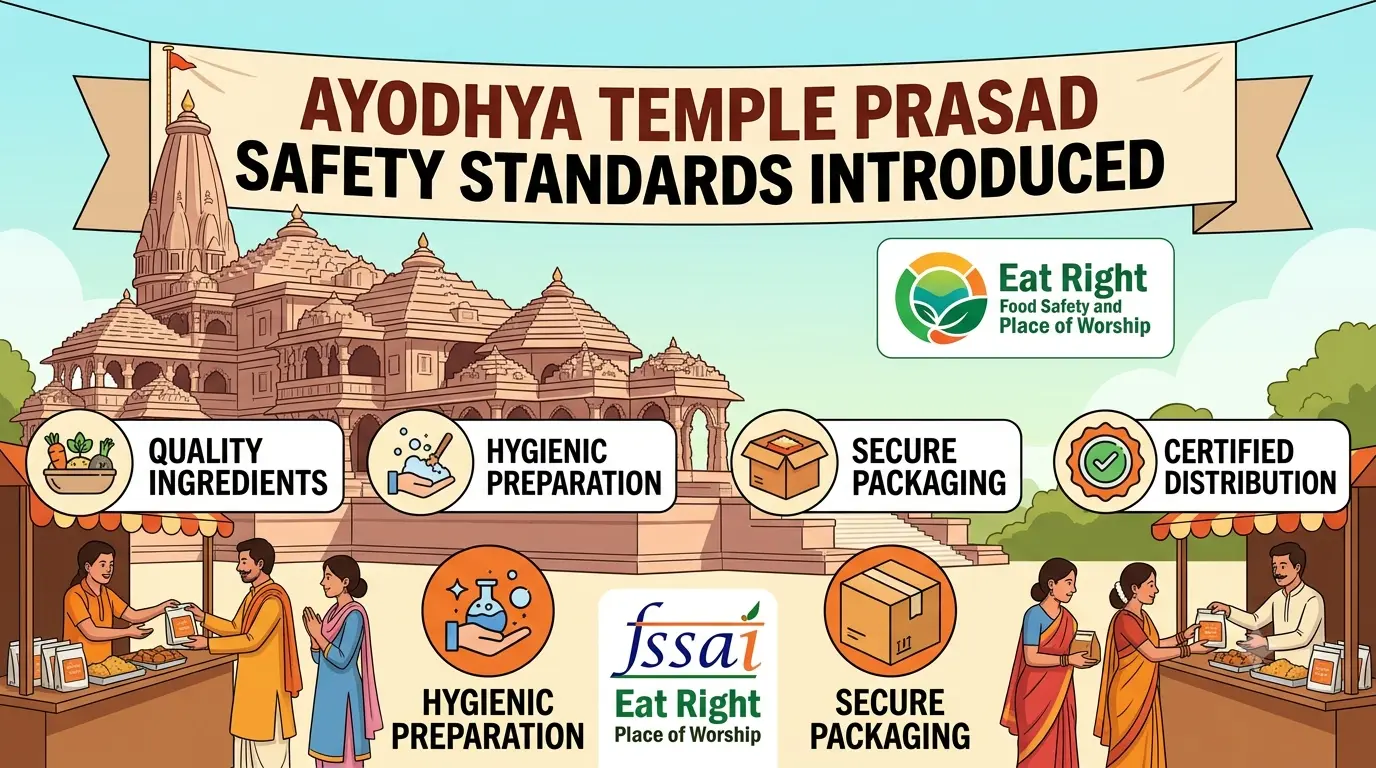
Here’s the headline for your thali: Ayodhya’s Ram Temple has the highest Ati Vishisht rating from the Food Safety and Standards Authority of India under the Eat Right Place of Worship initiative. The Shri Ram Janmabhoomi Teerth Kshetra scored 103 out of 114 in the regulatory food safety and hygiene assessment. That is a tidy report card for the prasad line, from mixing the dough to portioning each serving. Food safety certificates issued under the Blissful Hygienic Offering to God programme carry a two-year validity, a practical timeline for training, cleaning schedules, and kitchen fixes.
Certification did not stop at one mandir. Five other places of worship in Ayodhya, including Hanumangarhi, Kanak Bhawan, a Jain shrine, and the Maa Devkali temple, were certified under the same initiative. For you, that headline means the same yardstick is being used across these prasad kitchens in the city. When a rating reads Ati Vishisht, you can expect systems to be written down, checked, and repeatable, so each portion reaches your hands with the same care.
FSSAI hygiene standards for religious food offerings
Behind the shiny certificate is a framework with teeth. The Food Safety and Standards Authority of India set up the Blissful Hygienic Offering to God in 2018 as part of the Eat Right movement. Assessors don’t only peep at the bhatti and leave. A hygiene check spans 47 individual parameters that look at sanitary conditions in the kitchen, how ingredients are stored, how food is prepared, and how it is distributed. It reads like a prasad yojana for order: counters clean, bins covered, laddus cooling safely, and serving points managed.
That rigour is kept alive after the ribbon day. To hold a hygiene rating, community and religious kitchens undergo regular independent inspections and audits by accredited third-party agencies. Think of it as the external nudge that keeps SOPs from gathering dust. For you, the spirit is familiar: plan checks, invite another set of eyes, and stick to a routine. In a home setting, that can mean scheduled deep cleans, dated pantry jars, and a clear path from kadhai to thali so food moves cleanly from preparation to serving.
Safety training and internal audits for temple staff
Here’s the picture: every two weeks at the Ram Temple, a standard checklist comes out and the kitchen gets a calm, methodical walk-through. This internal safety round is how the certified hygiene level stays steady. It pairs with real learning. The kitchen staff and food handlers have completed the Food Safety Training and Certification programme on proper sanitation and catering practices, so everyone speaks the same hygiene language. From rolling laddus to portioning prasad, the steps are taught, practiced, and checked, the way you repeat a recipe until the texture feels right.
Think of it like laying out masale before tadka: a list, a rhythm, a trained crew. The fortnightly checklist catches small lapses early and keeps routines visible, so the laddu line moves with fewer surprises. If you love borrowing good habits, copy that cadence at home. Make a simple list and run it every two weeks, and teach anyone who helps you the basic sanitation you use yourself. You’ll feel it when ghee is hot and prasad must move quickly from kadhai to thali.
Applying large scale food safety practices at home
Start with your tools. Large-scale devotional kitchens rely on stainless steel equipment and non-porous utensils to prevent microbial accumulation. That translates neatly to your counter: pick a stainless steel kadhai, bowl, spatula, and a non-porous tray for cooling and portioning. Keep them dry and ready before you light the stove, and avoid wooden or chipped surfaces when you handle prasad. Dry, smooth tools are easier to wash properly, and they don’t hold on to moisture or residue that can travel into the next batch.
For a festive sweet at home, think besan laddu. Slow-roast coarse chickpea flour in ghee until it smells deeply nutty, then sweeten and shape. Spread the mixture on a clean stainless steel plate as it cools so it sets evenly, then roll. Once made, keep laddus in a cool, moisture-free place to retain quality. That means no steamy shelves near the stove, and wipe hands and spoons before touching the box.
This story was written with AI help from facts we checked against more than one source, then reviewed and edited by our editors. Spotted a mistake? Tell us on our contact page.