
What it is
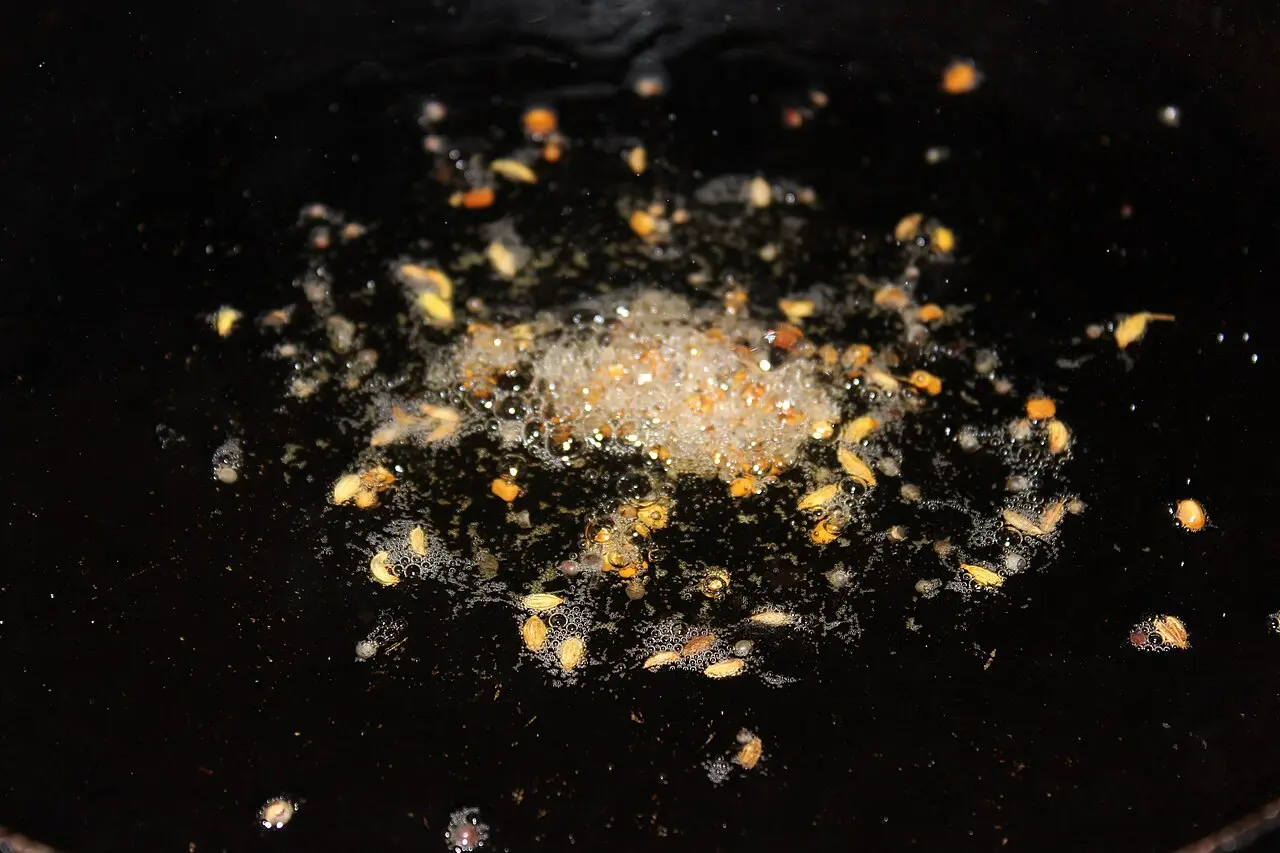
Panch phoron is a tadka starter: a whole mix of cumin, black or brown mustard, fenugreek, nigella and fennel seeds in equal parts. Kept unground, the five seeds crackle in hot oil or ghee and release their essential oils.
It is almost universally added at the beginning, during chaunk or phoron, so the spices bloom before the rest of the vegetables or lentils go in.
Flavour and aroma
Bloomed in hot oil or ghee, the seeds pop and release a layered aroma: pungent from mustard and nigella, earthy from cumin and nigella, a distinct bitter note from fenugreek, and fennel’s gentle sweetness. The mix is highly aromatic with a balanced sweet, bitter, earthy, and peppery finish.
Cooking with it
When to add it
How much to use
For Bengali mixed vegetable curries like labra and panchmishali torkari, heat oil, add panch phoron, let it crackle, then add the vegetables.
In Odia cooking, pancha phutana is the first tempering for dalma, so it hits the hot oil or ghee before the lentils and vegetables.
Start sweet–tangy chutneys of green mango, tomato or dates with this tempering, and use it in Eastern Indian mustard oil pickles and sour vegetable preparations.
Origin and where it grows
Panch phoron originated in the eastern region of the Indian subcontinent, across today’s West Bengal, Odisha, Assam, Bihar, and Bangladesh. Regional names reflect that spread: in Bengali, Panch phoron; in Odia, Pancha phutana; in Assamese, Pas phoron; and in the Bhojpuri and Maithili belt of Bihar, Panch phoran.
Buying and storing
How to pick good quality
Keep the heat moderate so the spices crackle and bloom without scorching the delicate fenugreek and nigella. If you’re sensitive to bitterness, reduce the fenugreek slightly when mixing your batch.
Storage
Store panch phoron in an airtight glass or stainless steel container, away from heat, moisture, and direct sunlight.
Shelf life: Up to one year when kept as whole seeds in a cool, dark place
Frequently asked questions
What is panch phoron made of?
Equal parts of whole cumin, black or brown mustard, fenugreek, nigella and fennel seeds.
When do I add panch phoron to the pan?
At the initial tempering stage (chaunk or phoron) in hot oil or ghee, so the seeds crackle and release their aroma.
How much panch phoron should I use for 4 servings?
About 1/2 to 1 teaspoon of the whole mix is usually enough to temper a dish for four people.
What dishes use panch phoron?
Bengali mixed vegetable curries like labra and panchmishali torkari, the Odia dish dalma, sweet–tangy chutneys of green mango, tomato or dates, and Eastern Indian pickles and sour vegetable preparations.
Can I make a quick substitute for panch phoron?
Yes. Mix equal parts of whole cumin, brown mustard, fennel, fenugreek and nigella seeds just before cooking.
Related ingredients
 Spice blend
Goda masala
गोडा मसाला (Goda masala)
 Spice blend
Rasam powder
रसम पाउडर (Rasam powder)
- Spice blend
Garam masala
गरम मसाला (Garam masala)
- Spice blend
Pav bhaji masala
पाव भाजी मसाला (Pav bhaji masala)
- Spice blend
Pickle masala
अचार मसाला (Achar masala)
 Spice blend
Sambar powder
सांबर पाउडर (Sambar powder)