
What it is
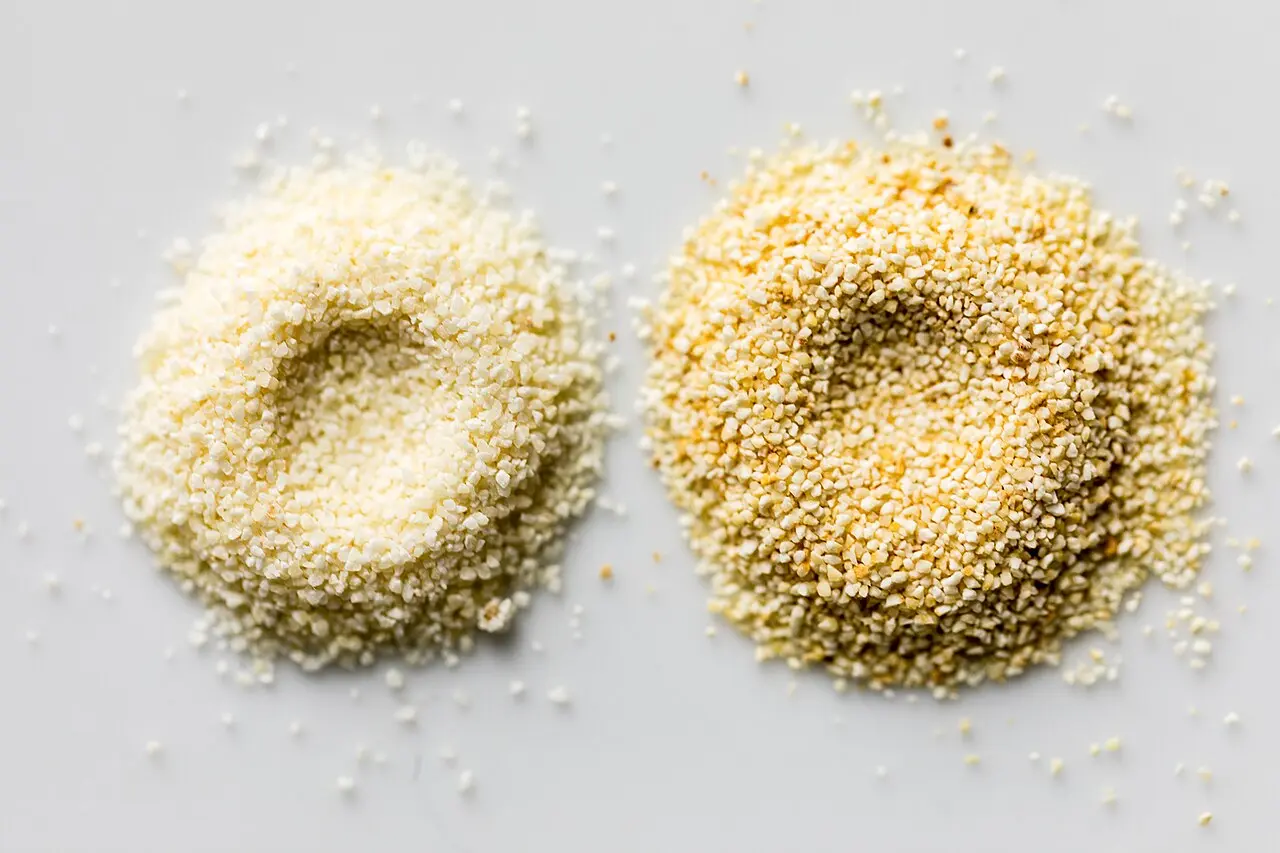
Semolina, known as suji or rava, is made of coarsely milled wheat endosperm, predominantly from durum wheat or common wheat.
You’ll also hear it called Ravai (Tamil), Rava (Telugu, Marathi), Rave (Kannada), and Suji (Bengali).
Flavour and aroma
Raw suji tastes neutral and wheaty. A quick roast, dry or in ghee, turns it fragrant and distinctly nutty. That nutty aroma is what you want before making upma, halwa, or batters.
Cooking with it
When to add it
How much to use
For upma, roast the suji, make your tadka, then slowly stream the roasted semolina into the hot boiling or tempered liquid while stirring continuously so it doesn’t clump.
It’s the base for sooji halwa or kesari bath with ghee, sugar, and cardamom, and for sweets like rava ladoo.
Use it in rava dosa and rava idli batters, or knead into doughs for fried breads. Coarse suji also gives a crisp outer coat to fried fish, vegetable cutlets, and pan-fried snacks.
Substitutes
- Rice ravause in equal measure as a gluten-free replacement in upma or idli
Origin and where it grows
Semolina is milled from the wheat endosperm, typically from durum or common wheat. In India, major wheat for semolina comes from Madhya Pradesh, Uttar Pradesh, and Punjab. Bhalia wheat from Gujarat is a GI-tagged durum variety known for use in semolina and pasta products.
Grown in
Notable varieties
- Bhalia WheatGI tagged
Gujarat
Buying and storing
Simple adulteration check
To check for iron filings, pass a magnet through the suji or rava; magnetic adulterants will adhere to it, as noted by the FSSAI DART manual.
Storage
Store suji in a tightly sealed, airtight container in a cool, dry pantry, away from humidity.
Nutrition
Per 100 g unenriched semolina: roughly 360 calories, about 12.7 g protein, and nearly 3.9 g dietary fiber (USDA FoodData Central).
Frequently asked questions
What is semolina (suji) made from?
Coarsely milled endosperm granules of wheat, predominantly durum wheat or common wheat.
How do I add suji without lumps?
Roast if the recipe calls for it, then slowly stream the semolina into hot boiling or tempered liquid while stirring continuously.
Can I replace suji with rice rava?
Yes. Use rice rava in equal measure as a gluten-free replacement in savory dishes like upma or steamed idli.
Is semolina gluten-free?
No. It’s a wheat product and contains gluten, so it must be avoided in celiac disease or wheat allergy.
Which states supply wheat for semolina in India?
Madhya Pradesh, Uttar Pradesh, and Punjab are major producers supplying wheat used for semolina.
Related ingredients
 Grain and rice
Broken wheat
दलिया (Daliya)
 Grain and rice
Finger millet
रागी (Ragi)
 Grain and rice
Pearl millet
बाजरा (Bajra)
 Grain and rice
Poha
पोहा (Poha)
 Grain and rice
Sorghum
ज्वार (Jowar)
 Grain and rice
Idli rice
इडली चावल (Idli chawal)