
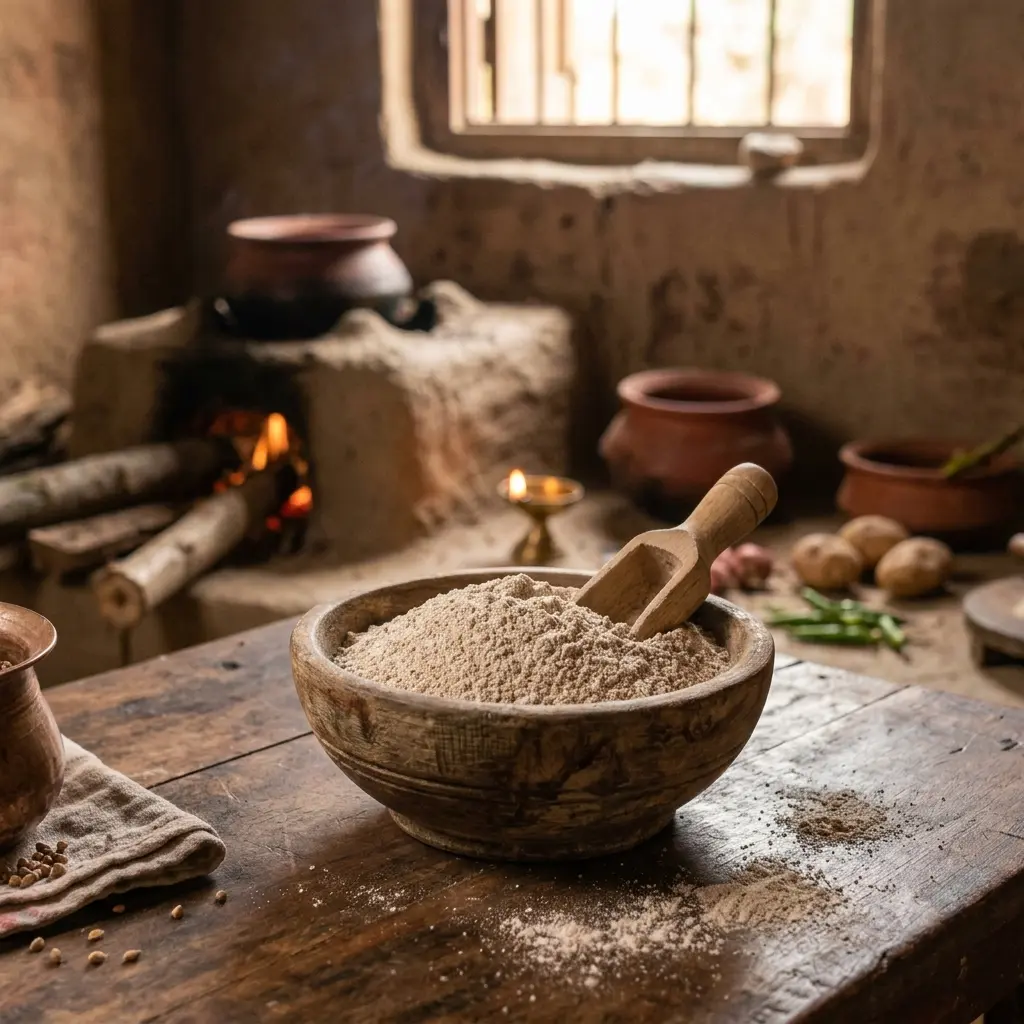
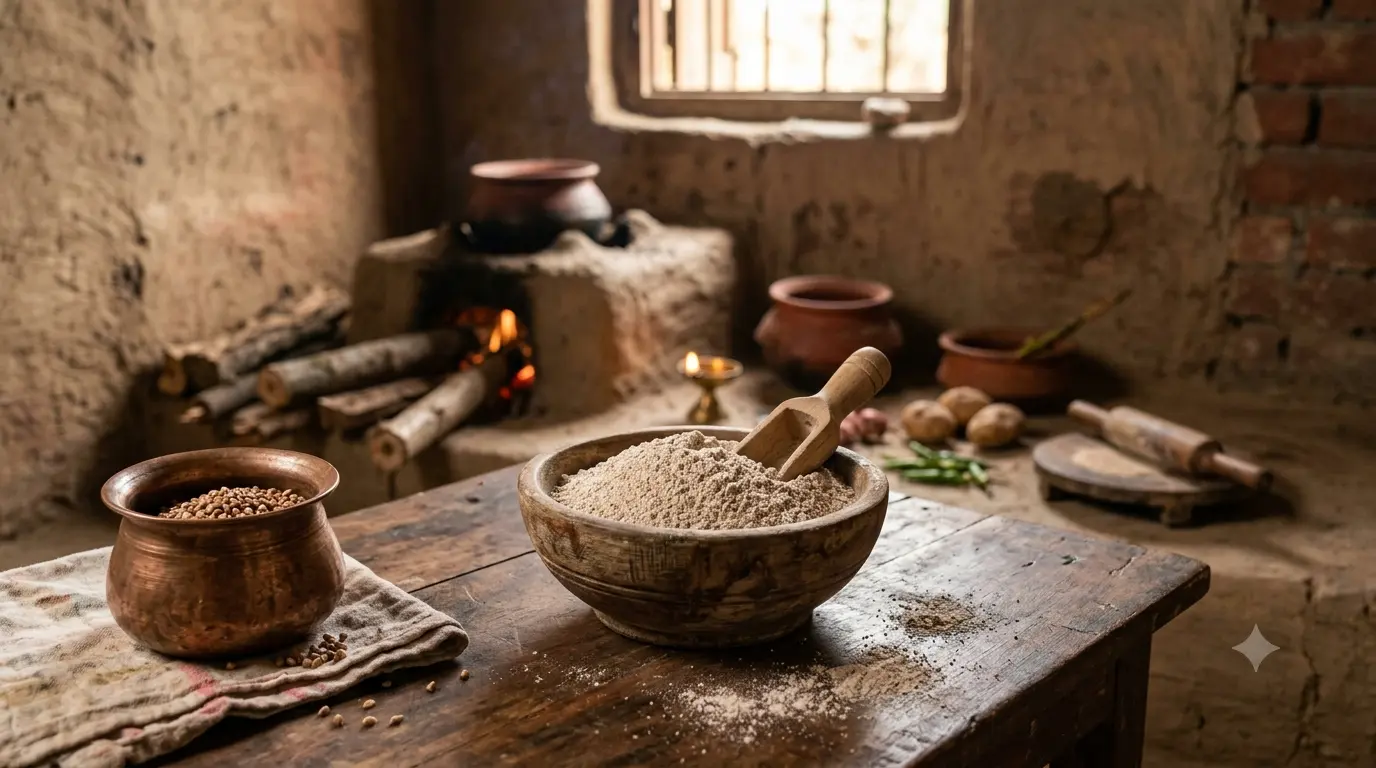
What it is
Kuttu atta is a gluten-free flour milled from the triangular achenes of common buckwheat, Fagopyrum esculentum, a pseudocereal in the knotweed family Polygonaceae.
In Kannada, buckwheat is traditionally called Kadu godhi.
Flavour and aroma
Expect an earthy, rustic taste with mild mineral notes and a faint astringency. It has a distinct nutty edge that intensifies during roasting or shallow frying, and turns deeply fragrant when toasted or fried in ghee.
Cooking with it
When to add it
How much to use
For Navratri fasting, knead kuttu ka atta with mashed boiled potatoes or colocasia to roll kuttu ki puri or kuttu ke parathe. Mix the flour into the dough before you griddle or fry.
Whisk it with spices into a batter and coat sliced potatoes, plantains or paneer for crisp, vrat-friendly pakodas.
Make kuttu ka cheela by blending the flour with water, rock salt and green chillies, then cook it thin on a flat tawa. You’ll smell the nutty aroma as it cooks.
Substitutes
- Singhara attause in equal proportions as a fasting-safe alternative with a lighter color and sweeter flavor
- Rajgira attaswap in equal quantity for softer dough texture during fasting days
Origin and where it grows
Buckwheat is native to southwestern China and the high-elevation Himalayan foothills, and has been cultivated for several millennia. In India it is actively grown across the Himalayan belt, including Uttarakhand, Himachal Pradesh, Jammu and Kashmir, Ladakh, Sikkim and Arunachal Pradesh.
Grown in
Buying and storing
How to pick good quality
Fresh kuttu atta looks light greyish-tan to dusty brown with fine flecks from the seed coat, and smells clean and nutty. Avoid flour with musty or bitter off-notes.
Simple adulteration check
FSSAI advisories recommend checking packaged kuttu atta for clumping or moisture, which can signal fungal spoilage. Avoid open, unbranded flour that may be blended with prohibited non-fasting flours or mineral fillers.
Storage
Store kuttu atta in a tightly sealed, moisture-proof dabba in a cool, dark cupboard, or refrigerate it. This helps protect its unsaturated fatty acids from turning rancid.
Nutrition
Buckwheat flour is completely gluten-free, dense in complex dietary fiber, and notable for its high lysine and tryptophan protein content along with minerals like magnesium and phosphorus.
Frequently asked questions
Is kuttu atta gluten-free?
Yes. Buckwheat flour is completely gluten-free.
What does kuttu atta taste like?
It tastes earthy and rustic with mild mineral notes and a faint astringency. The nutty flavor becomes richer when roasted or shallow-fried, and turns deeply fragrant in ghee.
How do I use kuttu ka atta for Navratri?
Knead it with mashed boiled potatoes or colocasia for kuttu ki puri or parathe. Whisk it into a spiced batter for pakodas, or make a cheela with water, rock salt and green chillies.
What can I substitute in fasting recipes?
Use Singhara atta in equal proportion for a lighter color and sweeter flavor, or Rajgira atta in equal quantity for a softer dough texture.
How do I check quality and avoid adulteration?
Look for a light greyish-tan to dusty brown flour with fine flecks and a clean, nutty smell. Avoid packs with clumping or moisture, and skip open, unbranded flour that may be blended with non-fasting flours or mineral fillers.
Related ingredients
 Flour
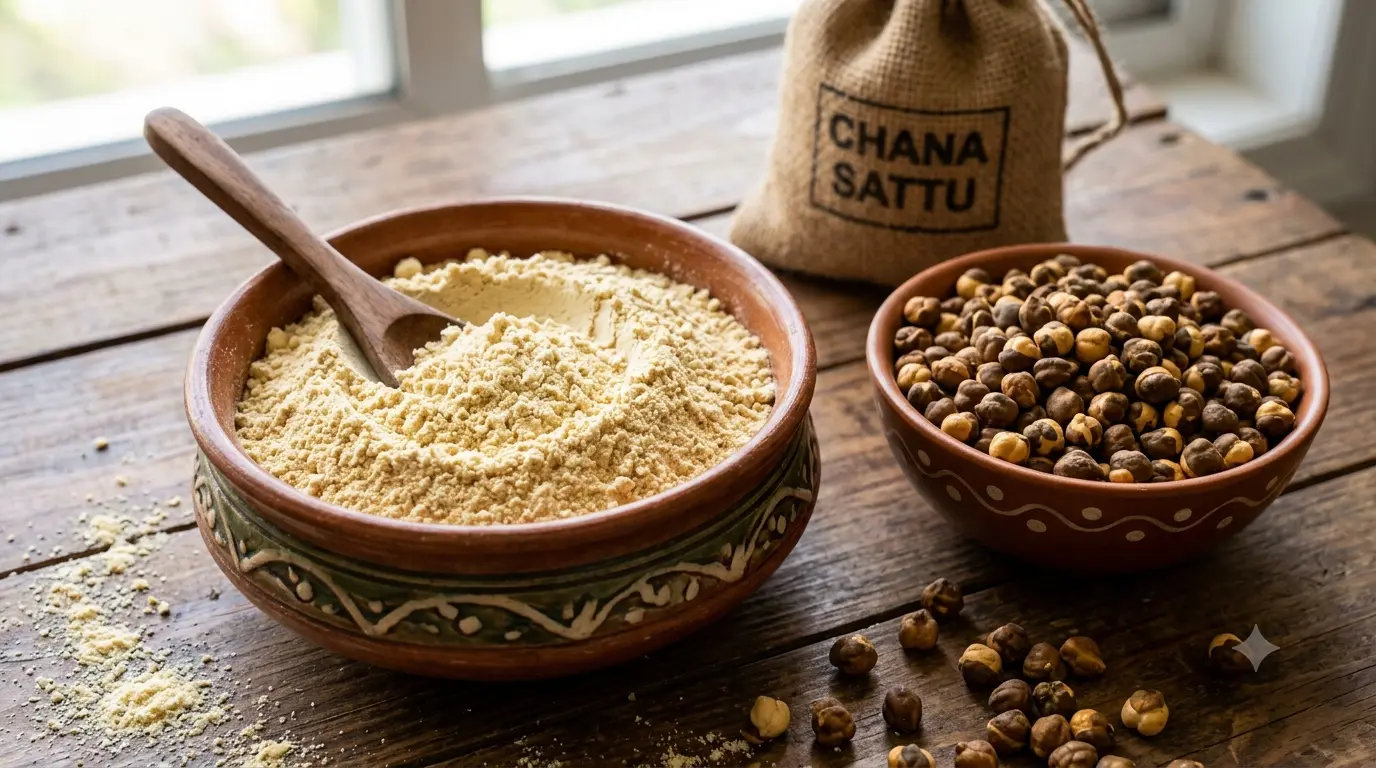
Flourchanna Sattu
सत्तू (Sattu)
 Grain and rice
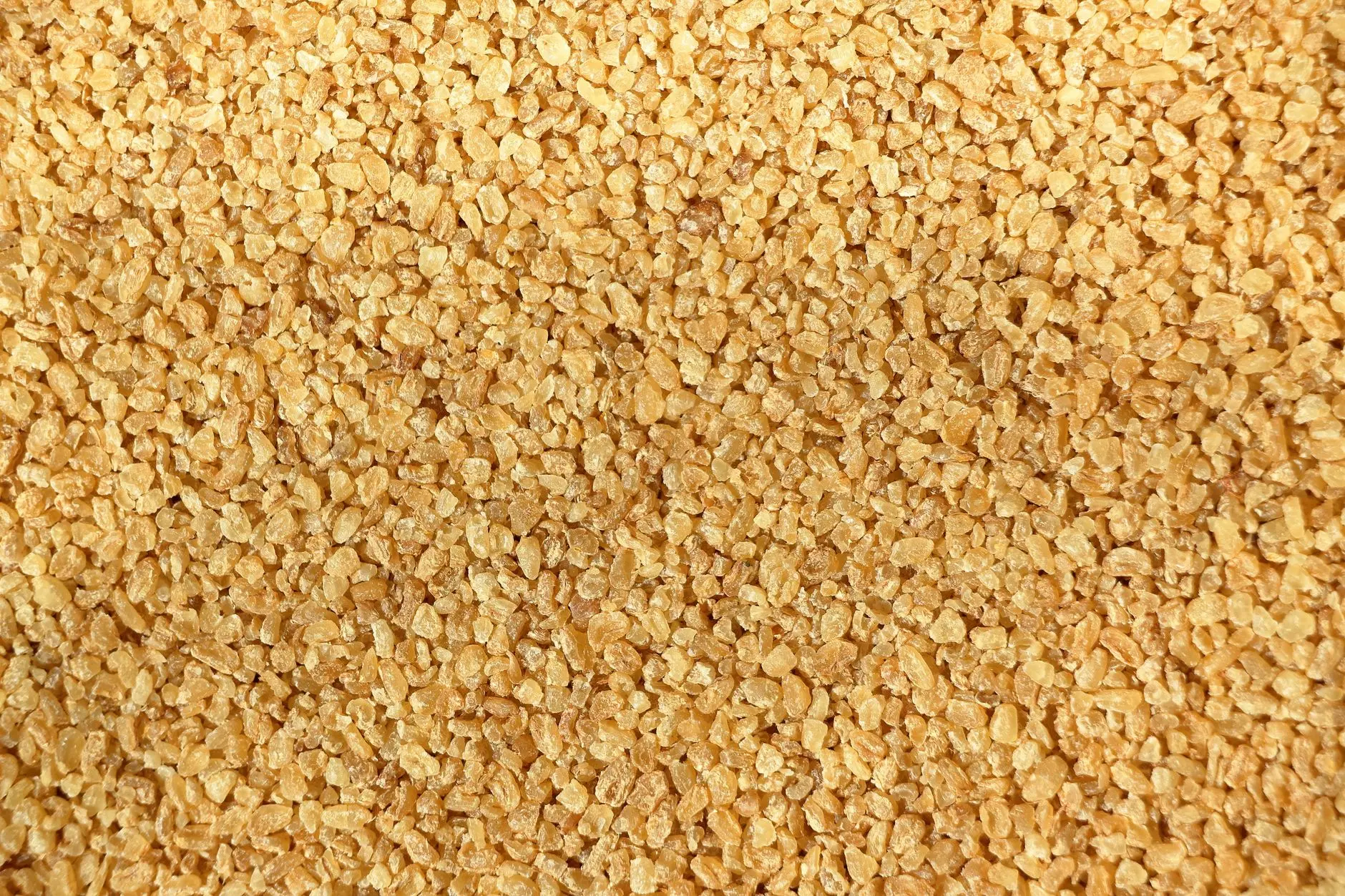
Broken wheat
दलिया (Daliya)
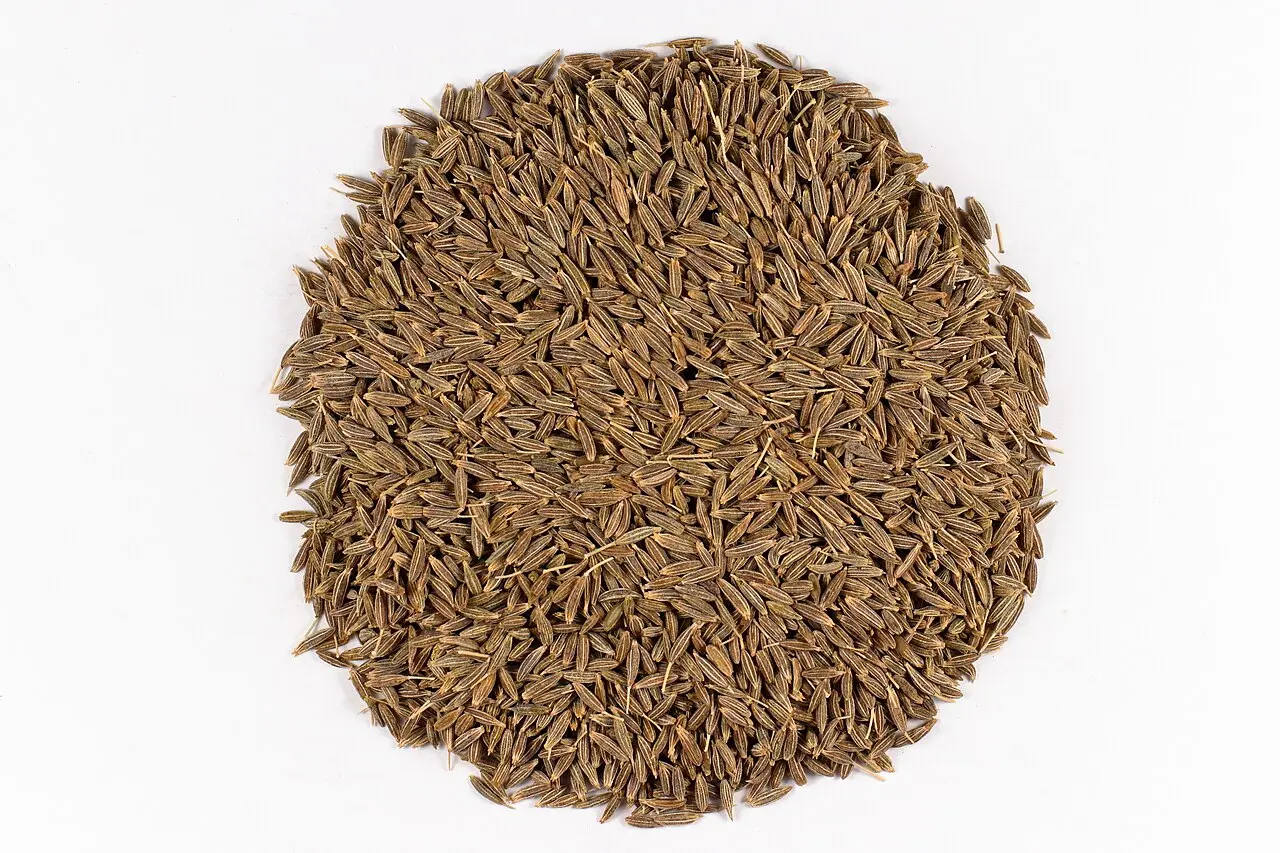 Spice
SpiceCumin seeds
जीरा (Jeera)
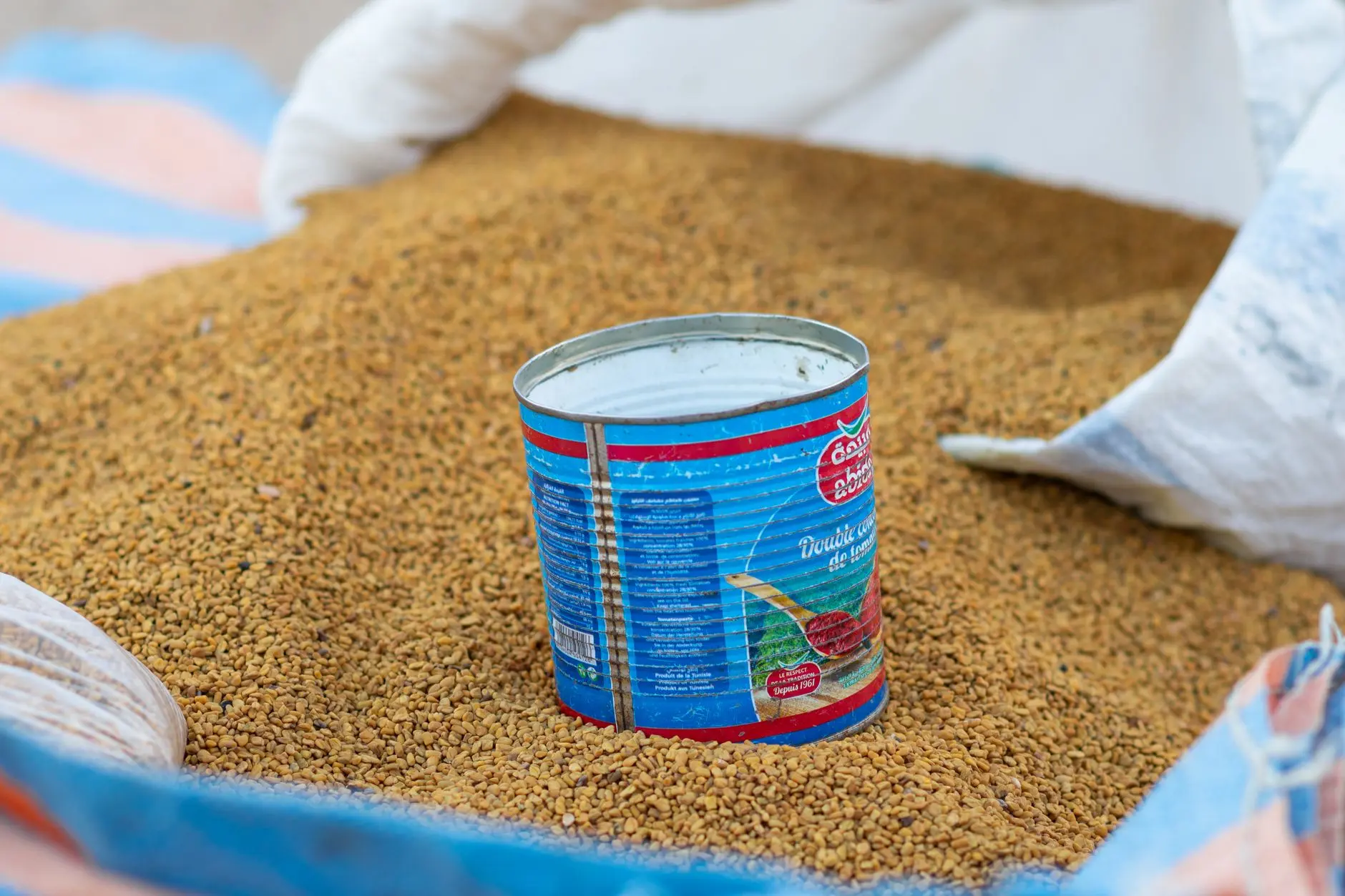 Spice
SpiceFenugreek seeds
मेथी दाना (Methi dana)
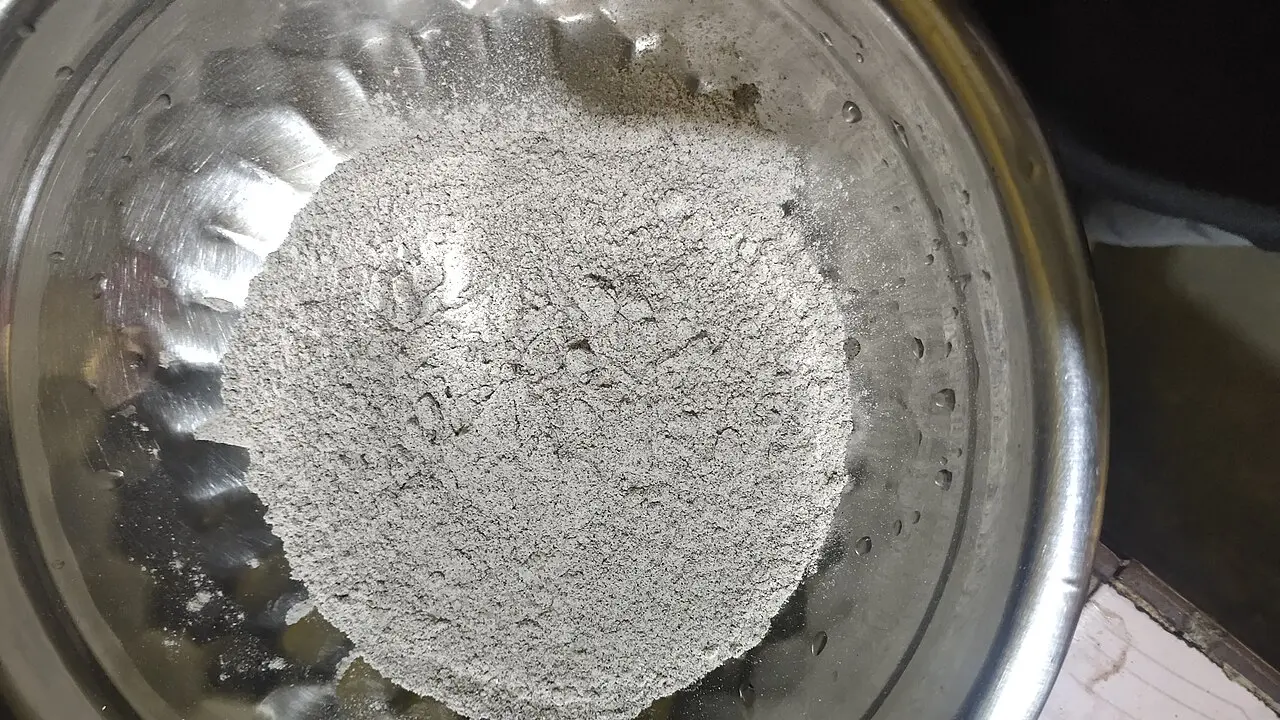 Grain and rice
Finger millet
रागी (Ragi)
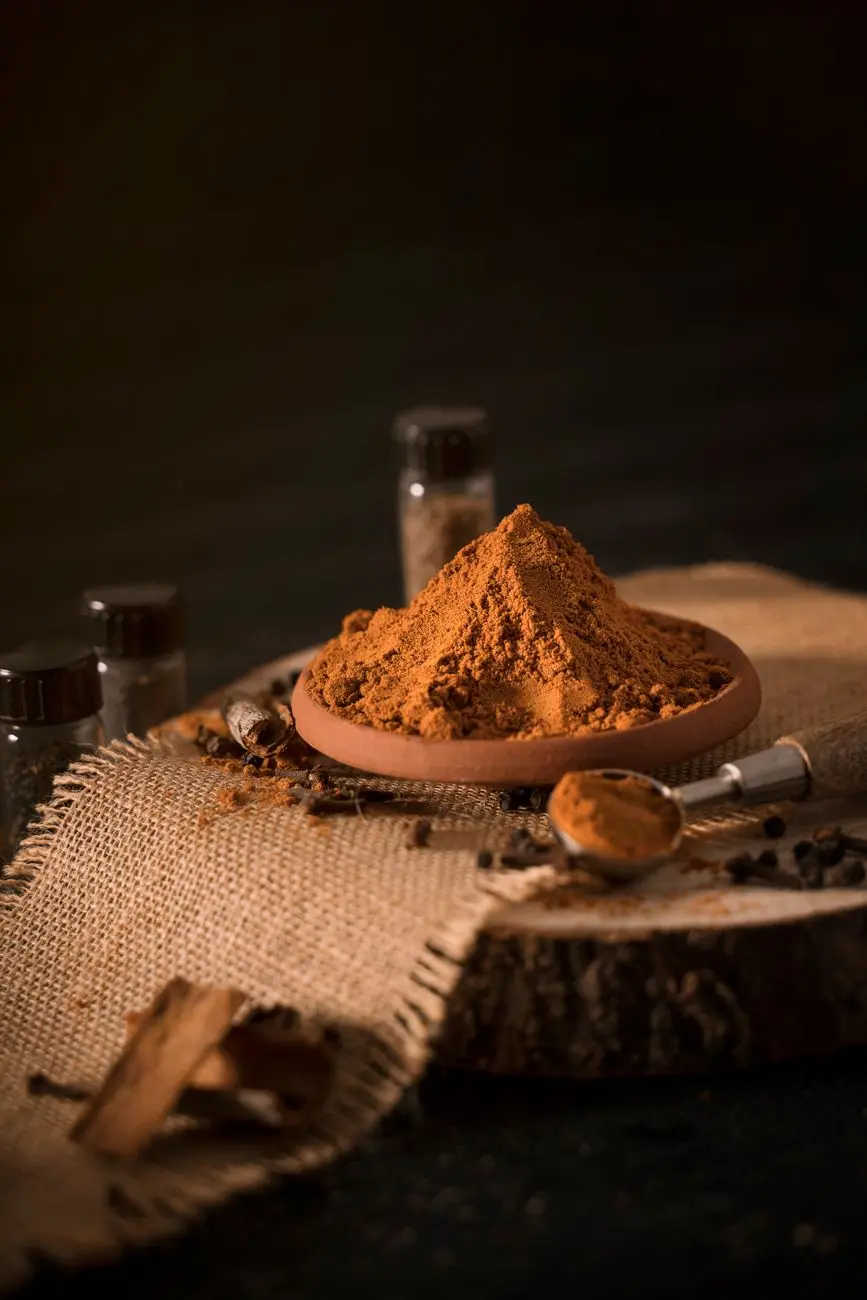 Spice blend
Goda masala
गोडा मसाला (Goda masala)